
Sumner County, Tennessee
Castalian Springs
A frontier landscape shaped by early settlement and ancient history.
Castalian Springs holds one of the deepest historical roots in Sumner County. Known earlier as Bledsoe's Lick, the community is tied to frontier settlement, early stations, and the remarkable Castalian Springs Mounds, which preserve evidence of a much older Native presence long before Tennessee statehood.
Explore Castalian Springs through current events, preserved places, and the local sites that help tell the story of Sumner County.
Upcoming
Events in Castalian Springs
Community gatherings, commemorations, and public events connected to Castalian Springs. Tap or click an event to learn more.
Explore
Historical Sites in Castalian Springs
Places in Castalian Springs that contribute to the county’s historical record and public memory.
Historical Site
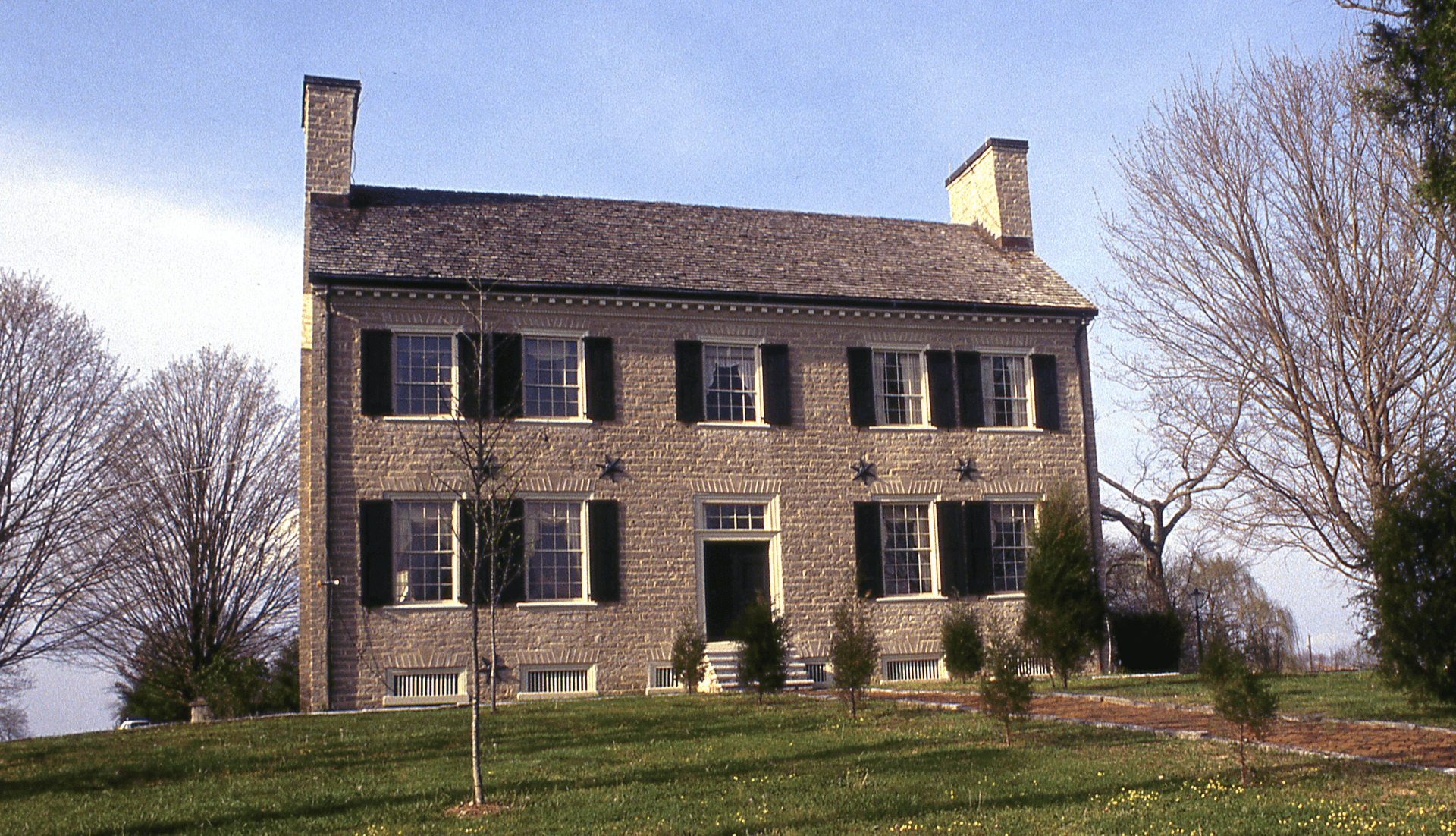
Cragfont
Constructed~1798
Cragfont is a beautiful Georgian-style mansion located on a craggy eminence above Bledsoe’s Creek seven miles east of Gallatin. James and Susan Black Winchester had the house designed and built between 1798-1802. The masons built the two-story house of gray, rough-finished native limestone quarried near the site. When completed, it was the most elegant residence on the Tennessee frontier, the first to reflect the grandeur and style of the fine eighteenth-century homes of Maryland and Virginia. Cragfont is T-shaped with the front section representing the top of the T and the rear wing its stem. At first the rear wing was erected of a single story, but a second floor for a ballroom was added circa 1810 using brick walls covered with stucco. The first floor included the parlor, entrance hall, office, library, a cross hall, dining room, kitchen, and, separated by a massive stone fire wall, a smokehouse. The owners’ bedroom, a hallway, two other bedrooms, a ballroom, and card room were upstairs. From the ballroom a stairway rose to a partially finished attic. Broad porticoes flanked the rear wing at both levels. An elaborate garden was situated on the east side of the house. Some sixty yards north was the family cemetery. Slaves lived in row quarters in an area west of the cemetery; the slave quarters have not survived. Cragfont was always home for Susan and James Winchester’s family of eight daughters and six sons. James died in 1826, but Susan lived there until her death in 1862. In 1958 the Tennessee Historical Commission acquired Cragfont, which is listed on the National Register of Historic Places and now is open to the public.
200 Cragfont Road, Castalian Springs, Tennessee, 37031
(615) 452-7070
Historical Site
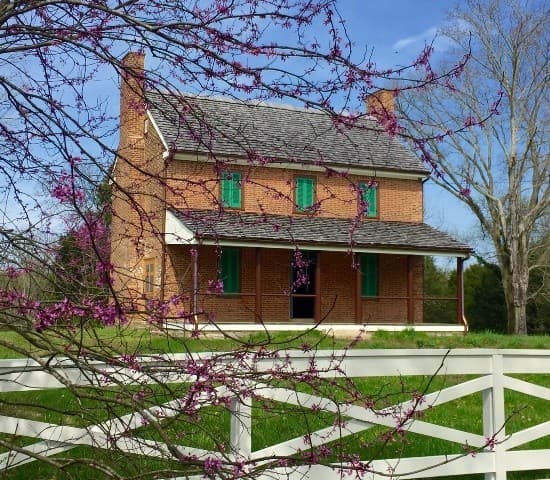
Hawthorne Hill
Constructed1806
Constructed in 1806, Hawthorne Hill was originally owned by John Bearden who had the Federal-style brick house constructed. Shortly after in 1817, Colonel Humphrey Bate, a war of 1812 veteran, purchased the property, and it remained in the Bate family until 1936. Hawthorn Hill is notable both as an example of early Tennessee architecture as well as for the accomplishments of Dr. Humphrey Howell Bate, Jr., the grandson of Colonel Humphrey Bate. Dr. Bate Jr. is most well-known for his leading role in the string band called “Dr.Humphrey Bate and His Possum Hunters.” Bate played the harmonica which, according to family tradition, he learned from the one of the formerly enslaved workers at Hawthorn Hill. In 1925, the band first performed on the WDAD radio station, where they quickly gained popularity and led to them becoming the first old-time string band to play at the newly established Grand Ole Opry. During this time, his daughter, Alcyone Bate, who played ukulele, became the first woman to play at the Grand Ole Opry. In 2007, Hawthorn Hill become property of the Tennessee Historical Commission and currently operates under the management of Historic Castalian Springs.
195 Old Hwy 25, Castalian Springs, TN, 37031
(615) 452-7070 · director@historiccastraliansprings.org
Historical Site
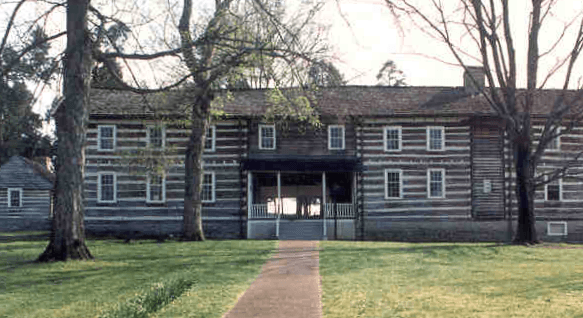
Wynnewood
Constructed1830
This is the largest 19th Century log structure still standing in Tennessee. The main house spans a length of 142 feet with an open breezeway through the center. Some of the logs comprising the walls are 32 feet long. Most are oak, some walnut, and others ash. None are the more typical poplar. In the late 1800s, the resort was expanded with summer cottages, a dance pavilion, a bowling alley, and a pool room. By 1915, however, mineral springs were becoming less fashionable, causing the Wynne family to close the business. They continued to work the farm and make the inn their home. Completed Circa 1830, Wynnewood was built of materials plentiful on the site. The foundation walls were formed of limestone blocks quarried from the adjacent hillside. The same material was used to build the original chimneys. Sturdy hardwood logs, many as long as thirty-two feet and all cut from nearby trees, were squared to 8” by 16”; V-notched; and set into place on the foundation, forming the walls of the two story building. The roof, latticed with wide boards, was then covered with hand-split wood shingles. The main building is 142 feet long (see photo below), including the kitchen. A breezeway or “dogtrot” divides it in two. A gallery runs 110 feet across the back. All rooms on the first floor either open onto the dogtrot or the gallery. Rooms on the second floor were reached by one of the two stairways, the principal one rising from the dogtrot and the second one originally rising from the family gathering room. The interior walls of the rooms were originally unfinished. In 1836 Almira had a number of them plastered, as instructed by her husband. In a letter from Natchez, he advised her to 'brave the difficulties and have it finished before bad weather.' A large detached kitchen (~20feet x 20feet) is located at the west end of the house. Today it is connected by a covered walkway. The massive fireplace is fronted by a stone hearth that spans one entire wall. This large cooking area was essential to providing three meals a day for the Wynne family and their resort guests.Southeast of the main house still stands a one room log cottage with a large stone fireplace. It was one of several cottages that were rented to resort guests at their highest rate. One of them served as office and living quarters for the local medical doctor.
210 Old Hwy 25, Castalian Springs, Tennessee, 37031
(615) 452-5463 · director@historiccastaliansprings.org
Continue Exploring
More Cities & Communities
From Bledsoe's Fort Historical Park to Cragfont and the historic landscape preserved there, Castalian Springs reflects some of the deepest and oldest layers of Sumner County's history.
Return to Cities Directory